
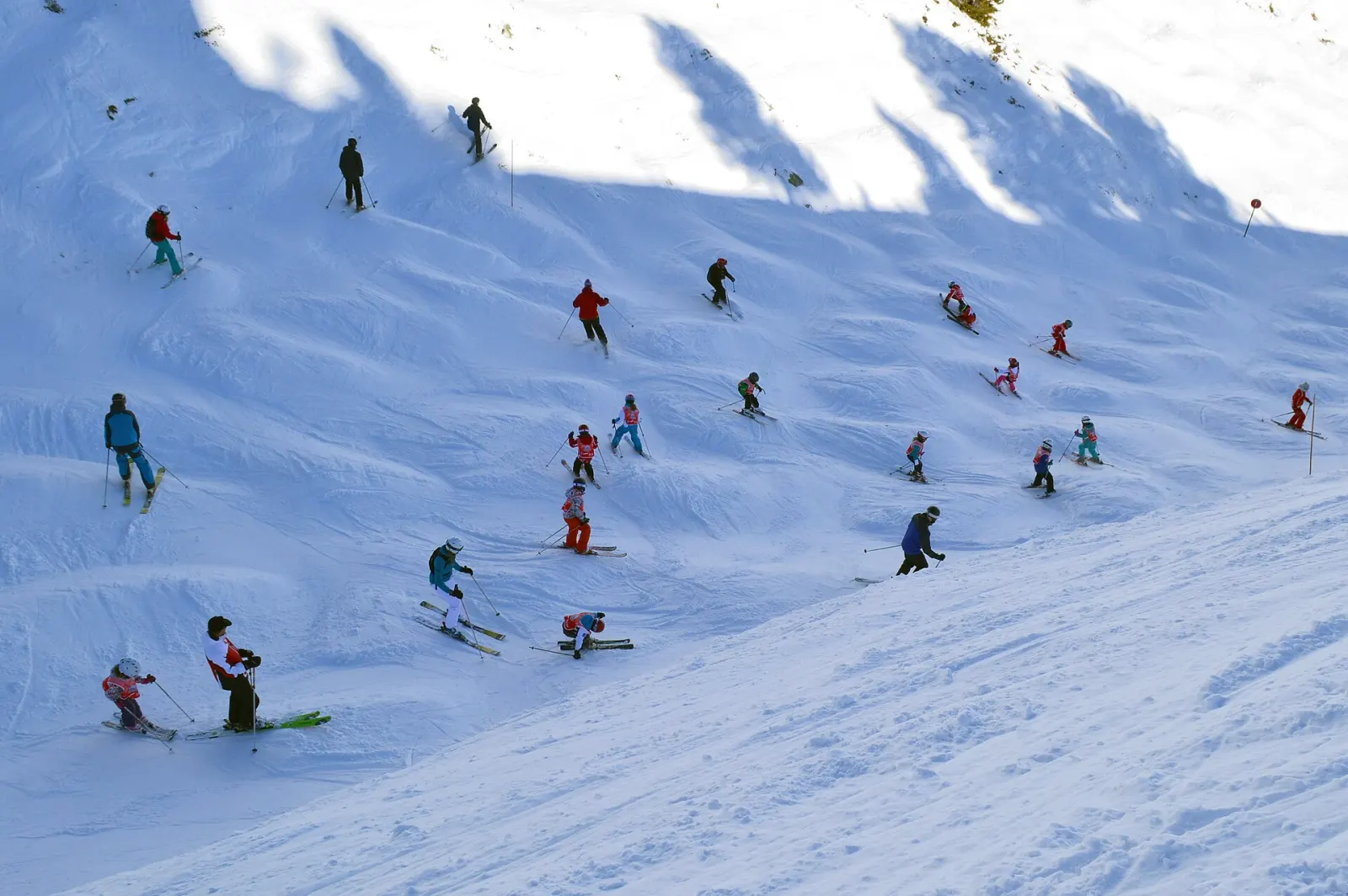
Just like on the road, there are shared rules on the slopes that everyone follows. Set by the International Ski Federation (FIS), these rules apply at almost every ski resort in the world. Here they are, summarized in our own words:
1. Respect for others
Ski in a way that doesn’t endanger or harm anyone.
2. Control of speed and skiing
Adjust your speed to your ability, the slope conditions, the weather and how crowded it is. Always be ready to stop.
3. Choice of route
The person skiing in front of you (below you) has the right of way. As the one coming from behind, you must choose a route that doesn’t put the person ahead in danger.
4. Overtaking
You may overtake from above or below, on the right or on the left, but you must leave the person you’re overtaking enough room for any movement they make.
5. Entering the slope and starting off
Look uphill and downhill when entering the slope, starting off after a stop, or turning uphill.
6. Stopping
Unless absolutely necessary, don’t stop in narrow spots or where visibility is limited. If you fall, clear the slope as quickly as possible.
7. Climbing or walking down
If you need to walk on the slope, keep to the edge of the slope.
8. Respecting signs
Follow the slope markings, color codes and warning signs.
9. Assistance
If you witness an accident, it’s everyone’s duty to help.
10. Identification
Anyone involved in or witnessing an accident, whether responsible or not, must share their identification details.
Beyond the rules
- Wear a helmet; for children, a helmet is a must.
- Don’t go on slopes above your level until your instructor says you’re ready; for more on levels, see our Ski Levels page.
- Don’t ski when you’re tired; injuries most often happen at the end of the day.