
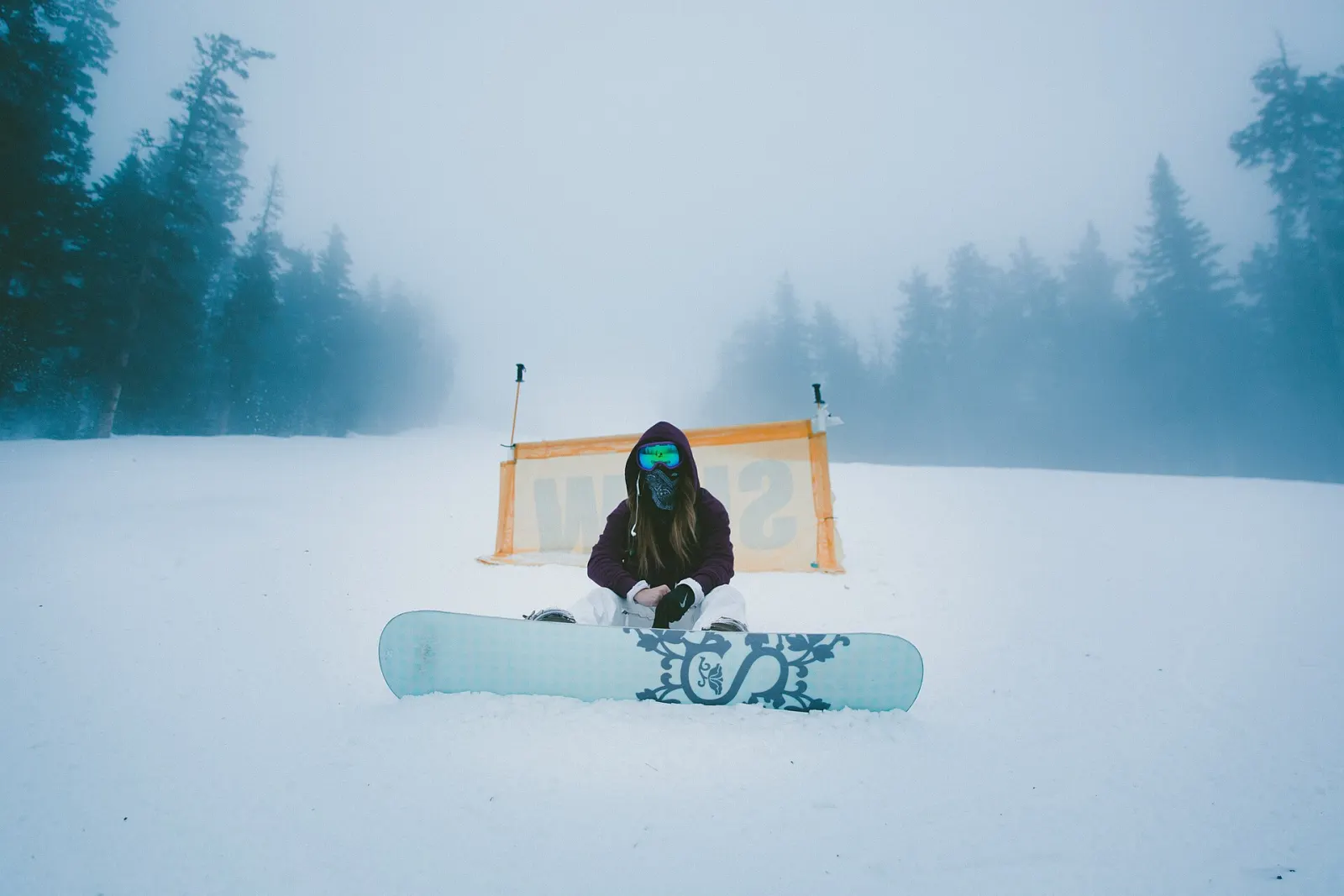
Quite a few of our students end their first day of snowboarding saying, “I fell a lot, but I laughed a lot.” On day one, the goal isn’t to ride perfectly; it’s to learn the basic skills you need to be able to ride at all.
Find your stance
First, you need to figure out which foot goes in front: left foot forward is a “regular” stance, right foot forward is “goofy.” Your instructor will find the right stance for you with a few simple tests and adjust your bindings accordingly.
1. Falling safely
- Falling forward: Don’t throw out your hands and hit the ground with your palms; try to land on your knees and forearms.
- Falling backward: Tuck your chin to your chest and fall as if you were sitting down; keep the back of your head from hitting the snow.
- A helmet and wrist guards make a big difference in the first few days.
2. Stopping on your edge
On a snowboard, you control your speed with the edge of the board. Sliding slowly and stopping on your heel edge (facing downhill) or your toe edge (facing uphill) is the most important skill of the first day. This is also called the “falling leaf”: the board slides down from side to side, like a leaf drifting to the ground.
3. Getting up
To get up from a sitting position, turn the board across the slope, dig your heel edge into the snow and push off with your hand to bring your weight over the board. For most people, getting up from a kneeling position is easier.
What happens on day two?
Once you can slide in control on your edge, you move on to your first turns. For many students, days two and three are when snowboarding really starts to be fun.
To start snowboarding with an instructor, take a look at our Snowboard Lessons page. For a comparison with skiing, read our post Ski or Snowboard?