
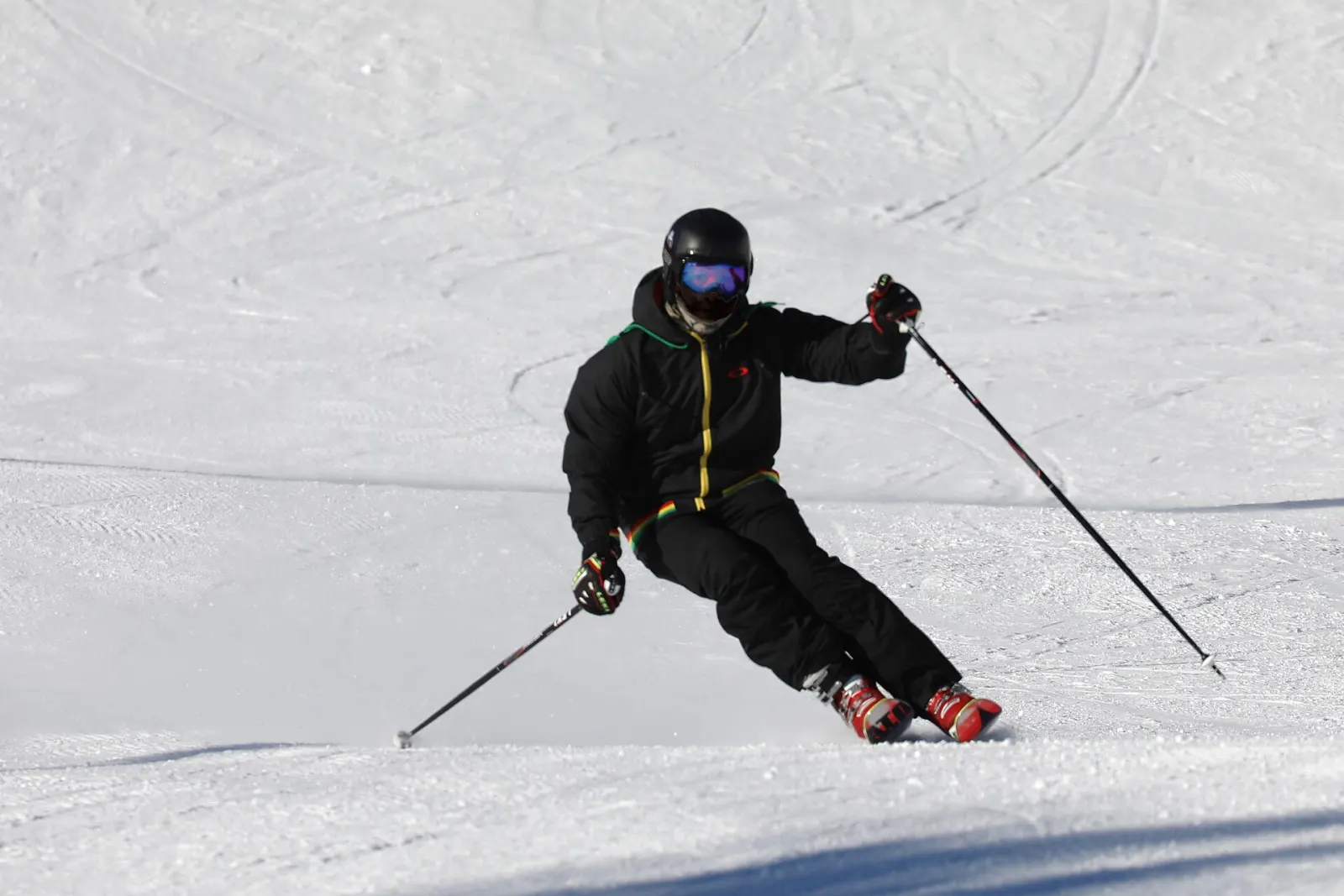
Learning to ski is largely a story of how your turns develop. The snowplow, where you hold your skis in a “V” shape, lets you slow down and turn; it’s safe, but tiring. The parallel turn is the key to skiing with less effort, more control and more fun.
1. Snowplow turn
Ski tips close together, tails apart. You put your weight on the ski opposite the direction you want to turn. At this stage, the aim is to be able to control your speed at any moment.
2. Basic turn
You start the turn in a snowplow; toward the end of the turn, you bring the inside ski in toward the outside ski, and the skis are briefly parallel. This is where you begin learning to use your edges.
3. Basic parallel
The snowplow angle gets smaller, and the skis stay parallel for most of the turn. Using your poles adds rhythm: planting the pole marks the moment the turn begins.
4. Parallel and short parallel turns
The skis stay parallel throughout the turn. Short parallel turns are short, rhythmic turns for controlling your speed on steep, narrow slopes.
5. Carving
Instead of skidding, the ski turns by “carving” on its edge, leaving two thin, clean tracks on the slope. It’s the most enjoyable stage of the technical discipline.
The most common mistakes
- Weight too far back: Leaning back out of fear reduces your control. Your shins should rest lightly against the front of your boots.
- Trying to turn with your upper body: The turn starts from your legs; your shoulders keep facing downhill.
- Moving to steep slopes too soon: A new technique needs to settle in on an easy slope first.
This transition happens much faster with regular lessons and the right feedback. For planned progress over several days, take a look at our lesson packages.